Why HVAC Companies Need AI-Powered Software to Automate and Scale Faster
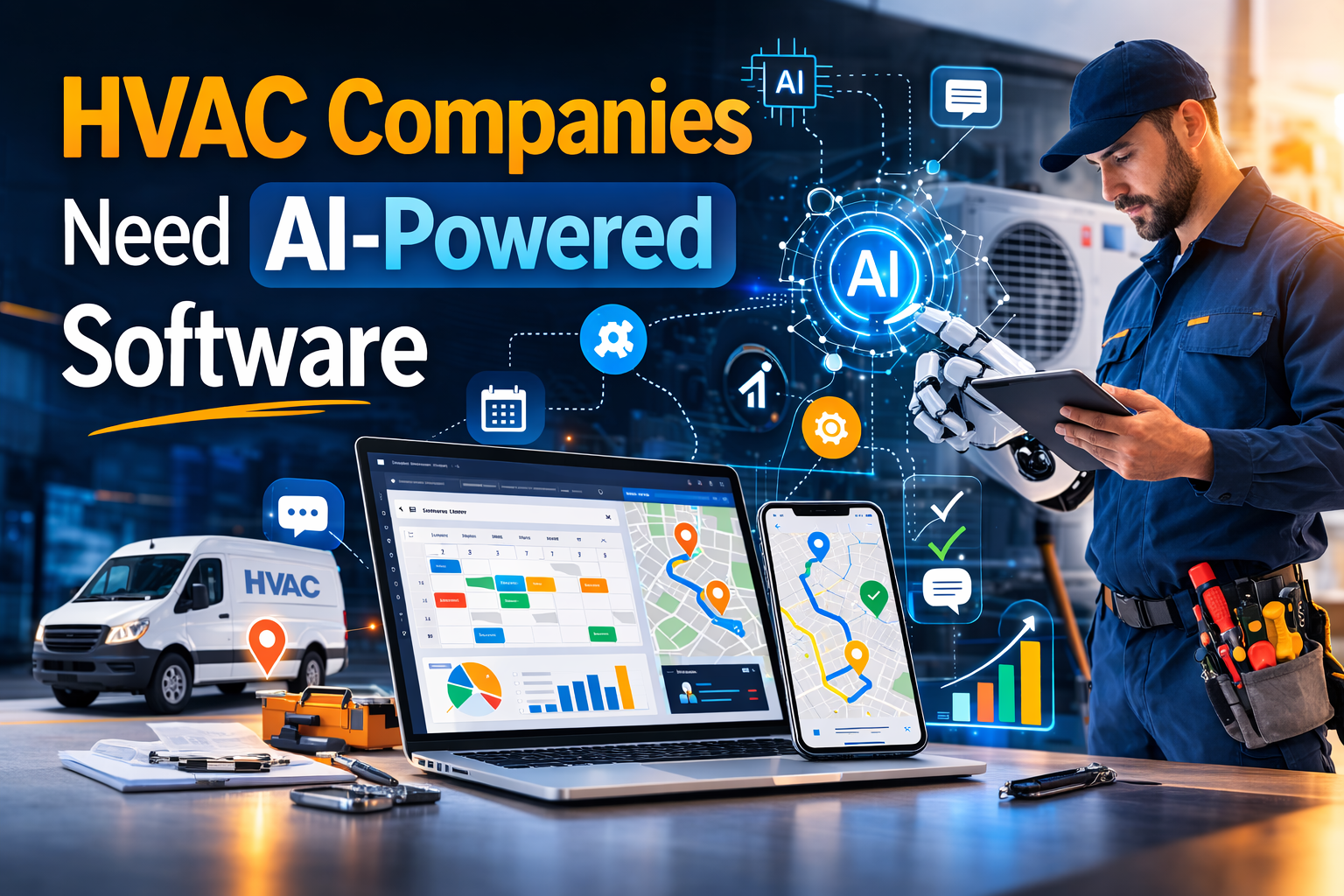
The HVAC industry is changing quickly. Customers now want faster service, easy appointment scheduling, and clear communication with technicians. Meanwhile, HVAC companies must manage technician schedules, service requests, inventory, and customer relationships, often across multiple locations. If these tasks depend on spreadsheets, manual scheduling, or frequent phone calls, things can quickly get disorganized. AI-powered HVAC software is making a big difference here. Modern HVAC dispatching software leverages smart automation to improve scheduling, boost technician productivity, and streamline service operations. For companies that want to grow and stay competitive, using top HVAC software for contractors is now a real advantage. This guide explains why AI-powered HVAC service dispatching software is important for companies looking to automate tasks, work more efficiently, and grow their business.
Why This Matters: The Growing Complexity of HVAC Operations
The HVAC industry is growing as more people need heating, cooling, and energy-efficient systems. As demand rises, running operations becomes more complicated. HVAC companies must coordinate the following:
- Emergency service requests
- Routine maintenance appointments
- Installation projects
- Technician schedules
- Customer communication
Without smart automation, even skilled service teams can feel overwhelmed by these tasks. Industry studies on field service management consistently show that automation improves job completion rates, technician utilization, and customer satisfaction. Businesses that adopt modern HVAC software are better equipped to manage high service demand without sacrificing service quality. AI-powered systems analyze real-time data to optimize workflows, making them a powerful tool for HVAC companies that want to scale operations efficiently.
1. Intelligent Scheduling That Maximizes Technician Productivity
Manually scheduling technicians is one of the toughest jobs in HVAC businesses. Dispatchers have to juggle technician availability, job urgency, location, and required skills. AI-powered HVAC dispatching software simplifies this process by automatically assigning jobs based on multiple factors, including
- Technician availability
- Skill specialization
- Job priority
- Technician location
This smart scheduling makes sure the right technician gets the right job at the right time. This saves technicians from spending more time completing service calls and less time waiting for assignments or travelling inefficiently between locations.
2. Smarter Dispatching for Faster Response Times
Speed matters in the HVAC industry, especially when heating or cooling systems break down during extreme weather. AI-powered HVAC service dispatching software allows companies to respond to service requests quickly and efficiently. When a new service request comes in, the system checks which technicians are available and sends the job to the closest qualified person. Dispatchers can also monitor job progress in real time to ensure requests are handled quickly. This means customers receive help sooner, which significantly improves customer satisfaction and trust.
3. Data-Driven Decision Making for Business Growth
A key benefit of AI-powered HVAC software is that it can analyze how your business is running. Older systems often depend on manual reports or guesswork to check business performance. AI-driven platforms provide better insights by analyzing patterns across many service activities. Contractors can track important metrics such as the following:
- Technician productivity
- Service response times
- Job completion rates
- Service demand trends
These insights help HVAC companies make better staffing, scheduling, and service expansion decisions. The best HVAC software for contractors turns business data into useful insights that help the company grow over time.
4. Automated Communication Between Office and Field Teams
Communication breakdowns are one of the most common causes of delays in HVAC service operations. Without a central system, dispatchers often use phone calls or messaging apps to reach technicians. This can cause missed updates or incomplete job information. Patching software centralizes communication by providing a single platform where:
- Dispatchers can assign jobs instantly.
- Technicians receive real-time updates.
- Job status changes are recorded automatically.
This streamlined approach to communication helps office staff and field technicians work together, reducing mistakes and keeping things running smoothly. Operations for Expanding HVAC Businesses. As HVAC companies grow, managing daily operations becomes more complex. A few technicians may be able to manage scheduling manually, but once service teams expand across multiple locations, manual systems quickly become inefficient. AI-powered HVAC service dispatching software helps companies scale by automating many operational tasks. With centralized systems, businesses can:
- Manage larger technician teams.
- Handle higher volumes of service requests.
- Monitor job progress across multiple service areas.
- Maintain consistent service quality.
This scalability allows HVAC companies to expand confidently without losing control over operations.
How to Implement AI-Powered HVAC Software Successfully
Adopting new technology can feel challenging, but HVAC companies can get the most out of automation by following a clear plan.
Step 1: Identify Operational Bottlenecks
Begin by looking at how your current workflows operate. Find out where delays or problems occur, such as in technician scheduling, dispatch communication, or job tracking. Understanding these bottlenecks helps determine which features of HVAC software will deliver the greatest impact.
Step 2: Introduce Automated Dispatching Gradually
Rather than changing everything at once, add automation step by step. Begin by implementing HVAC dispatching software for job scheduling and technician assignment. Once teams become comfortable with the system, additional features such as analytics and automated reporting can be integrated.
Step 3: Train Technicians and Dispatch Teams
Teams are more successful with new technology when they know how to use it well. Dispatchers and technicians should receive training on:
- Job scheduling tools
- Real-time updates
- Service tracking features. Good training ensures that automation enhances productivity rather than causing confusion.
Step 4: Continuously Monitor Performance
After implementation, HVAC companies should monitor key performance indicators, including service response times, technician productivity, and job completion rates. These numbers help businesses improve their workflows and get the most out of their AI-powered HVAC software.
Real-World Scenario: Automation Transforming HVAC Operations
Imagine an HVAC company handling many service requests over a wide area. Before using AI-powered dispatching tools, dispatchers used spreadsheets and phone calls to assign jobs. This often led to scheduling conflicts and late service appointments. With HVAC dispatching software, the company gained a centralized system that automatically assigned technicians based on availability and proximity. Technicians got real-time job notifications, so they could go straight to service locations without waiting for more instructions. The result was a more organized workflow, faster response times, and improved technician productivity.
FAQs
What is AI-powered HVAC software?
AI-powered HVAC software uses smart algorithms to automate scheduling, dispatching, and service management. It analyses business data to optimize technician assignments and improve service efficiency.
How does HVAC dispatching software help contractors grow?
Dispatch software streamlines scheduling, improves technician productivity, and reduces administrative workload. This allows contractors to handle more service requests and expand their operations without increasing operational complexity.
Can small HVAC companies benefit from AI-powered software?
Yes. Even small HVAC businesses can benefit from automation. AI-powered tools help small teams schedule jobs more easily, respond to service requests faster, and stay organized as demand increases.
What makes the best HVAC software for contractors?
The best HVAC software usually has smart scheduling, dispatch management, real-time communication, service tracking, and data analytics to help contractors work more efficiently.
How does automation improve customer service in HVAC businesses?
Automation reduces scheduling errors, improves response times, and ensures technicians arrive prepared with the right job details. These improvements lead to faster service and a better overall customer experience.
Final Thoughts
The HVAC industry is getting more competitive, and customers expect more from service providers. Companies that rely solely on manual processes may struggle to keep up with growing demand and increasingly complex operations. Adopting AI-powered HVAC software allows contractors to automate repetitive tasks, improve technician productivity, and deliver faster service to customers. With advanced HVAC dispatching software, businesses can streamline scheduling, improve communication, and manage service operations more effectively. For contractors looking to grow in a fast-changing industry, using the best HVAC software is a smart move toward building a more efficient, more successful business.
